
In the first part of an exclusive interview with Sheela Bhatt/Rediff.com on the eve of the first year of the Narendra Modi-led NDA government, BJP President Amit Shah talks about the government's achievements and the controversy over the land ordinance.

It has so far managed to raise only Rs 1,700 crore (Rs 17 billion), by divesting a 5% stake in Steel Authority of India.

Ballooning debt forces more and more Indian promoters to sell out to global majors and PE players.

Dr Manjiri Bakre's OncoStem is revolutionising breast cancer treatment. And has raised $6 million to do more!

Combining affordable IT with native Indian ingenuity and entrepreneurship F C Kohli believed would enable Indian small businesses match anyone and thrive.

The average bank customer does not know about the Customer Charter because it was designed - under Mr Rajan's regime - to be a lame duck initiative from the start: violating the charter has no consequences, points out, Debashis Basu.

Markets rebound with financials leading the gains on hopes of a peaceful solution to the turmoil in Ukraine
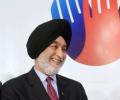
Over the years, Mr Singh has got in and out of innumerable businesses, cutting across sectors. He is one businessman who I have always found to be in a start-up mode, says Bhupesh Bhandari.
'When an institution believes its knowledge and capability is superior to everyone, it behaves like a frog in the well.' 'And this is precisely the cause for the mess,' says J N Gupta.

One should appreciate the sagacity and audacity of JRD and Nani Palkhivala in founding TCS on April 1, 1968. At that time there was no Microsoft or Intel, SAP or Accenture, much less Google.
They needed a person who could build and execute their vision: A frontiersman; a problem solver and an institution builder. It was their and India's good fortune that Faqir Chand Kohli more than measured up to their requirements and indeed laid the foundation to take TCS to unimaginable heights and to the giant success that it is today. Shivanand Kanavi salutes the incomparable F C Kohli, who passed into the ages last week.

Three stockmarket experts give their best picks for the New Year.

Private equity firms invested about USD 3.7 billion across 133 deals during the first quarter of 2018 as compared to USD 7.3 billion by way of 200 transactions a year ago.

'Wherever in the world there is political instability, those countries are beset with severe crises today. But India is in a much better position than the rest of the world due to the decisions taken by my government in the national interest,' President Droupadi Murmu said in her address to both Houses of Parliament.

Despite the headwinds both on the domestic and global fronts, Ramesh S Damani, member, BSE and a prominent investor, says India will weather a global trade war better than a lot of other Asian countries.
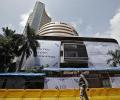
S&P BSE Midcap shed 0.8% while S&P BSE Smallcap tumbled 0.6%

Government to pay disproportionately high interest for borrowings from savings, overturning a nearly two-decade-long process of reforms in the management of public debt.
By no means do economists see the Reserve Bank of India stop at just a 25-bp cut. Some of the economists such as Soumyakanti Ghosh of State Bank of India are of the firm view that rates have room to fall by a total of 75 bps in the current financial year, starting with 25 bps in the August 7 policy.

The onus is on you to reject financial products that don't suit your needs.

Ad rates on regular days are less than half, media planners said.

Can you help this Indian achieve aviation history?

Sensex rises, Nifty ends at record high; RIL shares rally.

Ajit Mishra, vice president, Research, Religare Broking, answers your queries.
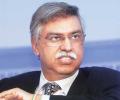
According to Munjal, there is an opportunity for somebody who comes from a not for profit background in health care to do something.

Parekh said divestment can unlock huge funds.

If Jatin Singh is right in the long run and his morphed business can help reduce farmer distress, Skymet will provide a service of far more value from where it began

The trust deficit has widened with buyers losing confidence in a developer's ability to construct and deliver a project on time.

The government will decide in August whether to sell a 5 percent stake in ONGC, a senior oil ministry official said, in a deal that would be worth $2.9 billion at current market prices.

Ratan Tata was the first one to realise that Indian companies had become a prisoner to tradition and needed to radically innovate.

SBI had a tough journey in the last 40 years.

Managing your own money is empowering. And if you haven't started yet, now is the perfect time!
The FM should quietly get the oil companies to offload the shares in the market and pocket the gains

'Sholay wallah kahani hai: 'Gabbar Singh aayega, Gabbar Singh aayega.' 'But what is inside Gabbar Singh nobody knows.'

India has made a remarkable journey from a top-down system of economic decision-making to one that unleashed our entrepreneurial spirits but the next big jump lies in enhancing the quality of our tale.
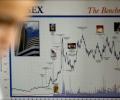
Sensex lacklustre, bluechips in focus.

Ayurvedic expert Dr G G Gangadharan on how the ancient Indian medical practice needs to be propagated in the country of its origin

The S&P BSE Sensex slipped 305 points to end at 25,400 and the Nifty50 dropped 87 points at 7,783.

After retirement, the pressure on finances increases in the absence of regular income. Here are a few suggestions to ensure a smooth post-retirement life

An Aadhaar card can fast-track the KYC procedure for some instruments.

What connects P S Jayakumar of Bank of Baroda, V Vaidyanathan of Capital First Ltd and Chandra Shekhar Ghosh of Bandhan?

I got to know that every referred case for angiography and angioplasty got a kickback of Rs 5,000 and Rs 15,000 respectively. Seeing this trend, doctors started paying referring doctors Rs 1 lakh in advance and adjusting it as and when patients came in. This menace slowly spread its tentacles all over the medical field, including radiological diagnostics and biochemistry laboratories. For every test ordered, 20 per cent of the bill was given back to the referring doctor. This led to doctors recommending unnecessary tests. The pharmaceutical companies also saw burgeoning business. Acclaimed doctors were given televisions sets, refrigerators, air conditioners and cars depending upon the prescriptions. General practitioners would prescribe unnecessary drugs, and were given returns in cash. A fascinating excerpt from Dr Upendra Kaul's When The Heart Speaks.
